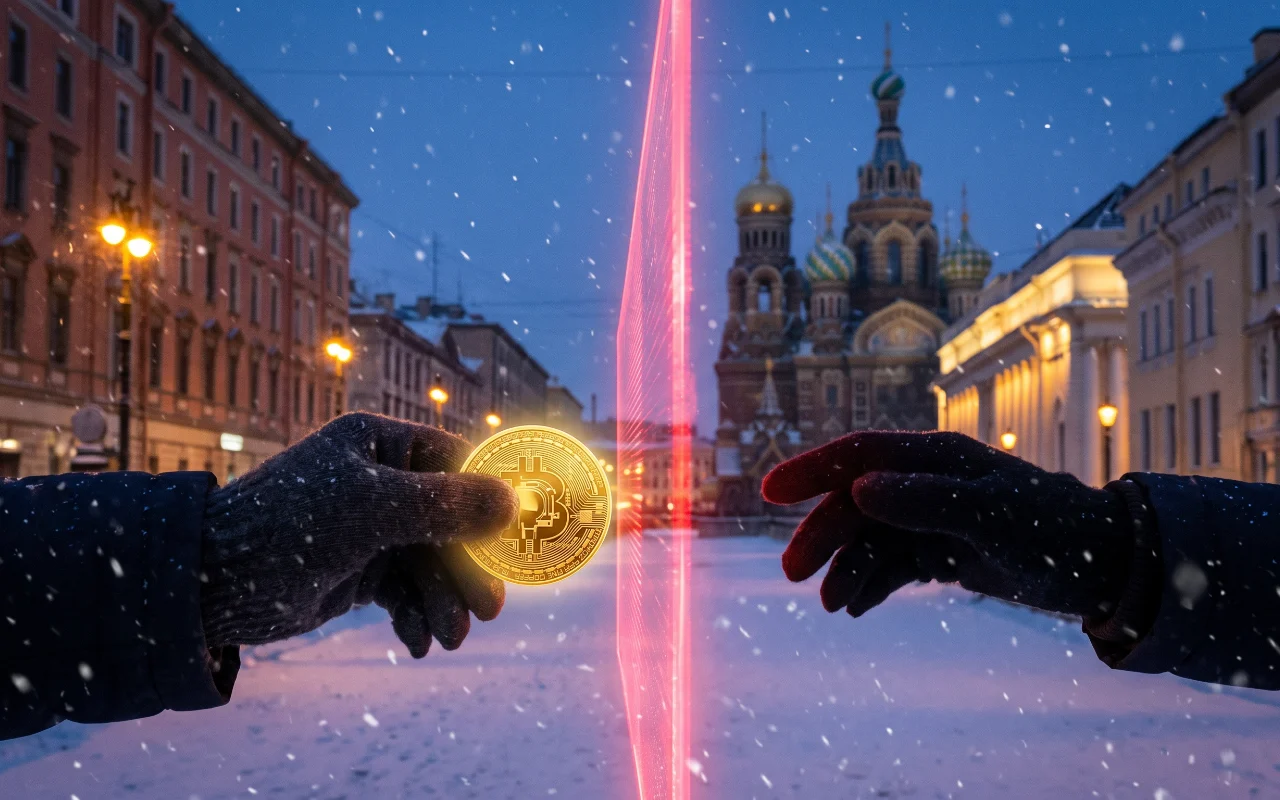
The Bank of Russia confirmed that direct crypto trades between individuals become illegal on 1 July 2027, and that withdrawals to self-custody wallets are already restricted.
Russia's central bank confirmed in guidance updated on 12 October 2026 that direct peer-to-peer crypto trading between individuals will become illegal on 1 July 2027, while a separate rule already bars people from moving coins from licensed accounts to wallets they control, according to Cointelegraph's report published on 15 October.
What happened
The Bank of Russia clarified how its new crypto regime treats ordinary users. Until the July 2027 deadline, person-to-person trades remain permitted. After that date, individuals will have to buy and sell through authorised intermediaries such as licensed exchanges and brokers.
The self-custody restriction is a different matter, because it is already in force. The regime rests on Federal Law No. 282-FZ, signed on 4 August 2026 and effective from 1 September. Article 31(9) of that law, as read by commentators, stops individuals from withdrawing crypto from a licensed account to a non-custodial wallet. Crypto payments for goods and services inside Russia remain prohibited.
The central bank has also been building out the licensed market. It has authorised Sberbank, the country's largest bank, to offer crypto exchange services after earlier approving it as a digital-asset custodian, and the new rules place exchange operators and custodians under central bank oversight. In other words, the state is not abandoning crypto. It is steering it towards supervised venues.
Why it matters
Taken together, the rules push retail crypto activity into the regulated banking system. Citizens can still hold digital assets, but the routes for acquiring them, trading them and taking them off-platform are being narrowed to channels the central bank can supervise.
That raises obvious enforcement questions. Samson Mow, chief executive of Jan3, argued that peer-to-peer trading is "more resilient" to crackdowns than centralised platforms. A SatoshiLabs executive noted that hardware and desktop wallets would be "unaffected" by a ban on wallet apps. Industry figures quoted in the coverage broadly expect the restrictions to be hard to police at national scale.
Important details are still open. The October guidance does not set out penalties for people who keep trading peer to peer after the deadline, and reports differ on whether existing registry platforms must fully comply by September 2027 or 2028. Some headlines have described the peer-to-peer ban as already in effect, which is not accurate: only the self-custody withdrawal limit applies today.
The change also affects how outsiders read Russian crypto demand. Peer-to-peer markets have long been a route for people who want to avoid bank-linked rails, and a licensed-only model narrows that route. Whether users migrate to compliant platforms, shift to tools outside the regulated perimeter, or reduce activity is not yet measurable from public data.
Market reaction
There was no distinct price response tied to the Russian announcement. Global markets were instead focused on US inflation and interest-rate expectations. CryptoWave data shows Bitcoin at about $81,090 with a market capitalisation of $1.63 trillion, and the Fear and Greed Index reading 53, which is neutral, compared with 61 a week earlier.
The development is more relevant to peer-to-peer volume and regional exchange flows than to headline prices. Russia is one of several jurisdictions that have been shifting from tolerating informal crypto use toward licensing it, and traders watching regional liquidity can follow broader activity on the market heatmap.
What to watch next
- Sberbank rollout: the launch of its licensed crypto exchange services.
- 1 July 2027: the date direct peer-to-peer crypto trades between individuals become illegal.
- Additional licences: further exchanges and custodians the Bank of Russia admits to its register.
- Penalty rules: any published enforcement details covering peer-to-peer trades after the deadline.