Crypto prices can move sharply, which makes it natural to ask whether a portfolio can be protected from a decline. Hedging is one way market participants try to offset some price exposure. It does not remove risk or guarantee a profit: a hedge can lose value, cost money, or move differently from the assets it is meant to offset.
This beginner’s guide explains the main ways people discuss hedging a crypto portfolio, how to think about hedge size, and what can go wrong. It is educational information, not a recommendation to trade. You can review assets on the CryptoWave currencies page and explore exchange profiles in the exchange directory, but always verify product terms directly with a provider.
What does hedging a crypto portfolio mean?
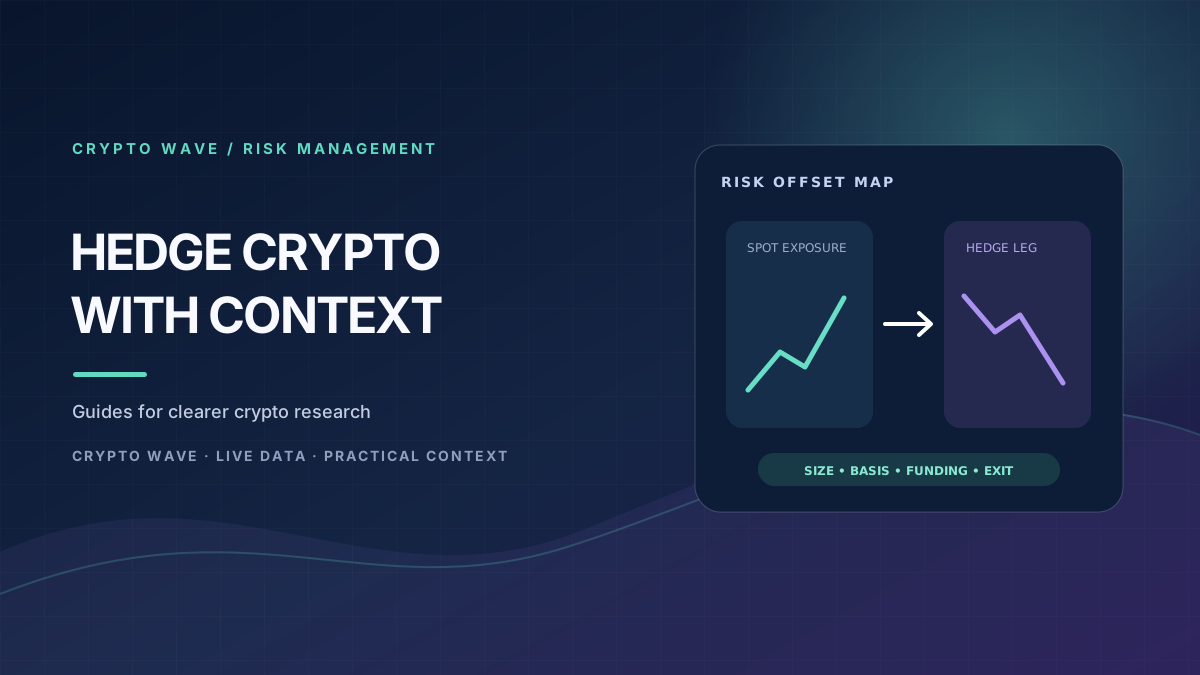
A hedge is a position or asset intended to offset part of another exposure. If someone holds crypto that may fall in value, a hedge could be a position that gains when that crypto or a related market declines. The outcome depends on the size and behavior of both sides.
A hedge changes the portfolio’s exposure; it does not make the underlying asset safer. If the hedge is too small, it may not offset much of a decline. If it is too large, the portfolio can lose when prices rise. And if the hedge tracks a different asset or benchmark, the two sides may diverge.
Common approaches and their trade-offs
Hold less exposure or keep liquid reserves
Holding a smaller amount of a volatile asset, or keeping part of a portfolio in cash or cash equivalents, may reduce direct price exposure without opening a derivative position. This approach avoids futures funding and liquidation mechanics, but it does not protect the value of the crypto that remains. Stablecoins also have issuer, redemption, custody, and market risks; their value should not be assumed to be risk-free.
Use futures or perpetual contracts
A futures contract provides price exposure without requiring the holder to own the underlying coin. A position in the opposite direction may offset some spot-price movement. Traditional futures have expiry and settlement terms; perpetual contracts do not have a scheduled expiry and use funding payments to help keep contract prices aligned with the underlying market. The CFTC explains that derivatives can be used for hedging, while also warning that virtual-currency futures are high risk and leverage amplifies price changes in its virtual currency trading advisory.
Perpetual funding is not a fixed borrowing rate or a guaranteed income stream. Depending on the rate and position direction, longs may pay shorts or shorts may pay longs. Rates and settlement intervals can change. See the exchange’s current contract terms; for example, Binance’s funding-rate guide describes how funding works for its perpetual products.
Use options
An option can provide a defined type of exposure for a limited period. For example, a put option gives its buyer the right, but not the obligation, to sell at a specified strike price before or at expiry, according to the contract terms. The buyer pays a premium, which can be lost if the option expires without value. Options have additional variables—such as expiry, implied volatility, and liquidity—that can make their value behave differently from the coin itself.
How to think about hedge size
Hedge size is often described relative to the exposure being hedged. Imagine, only as a simplified illustration, a portfolio with $10,000 of exposure to one asset and a hypothetical short position with $2,000 of notional exposure. That short would not offset the entire portfolio. If both instruments moved exactly together and the asset fell 10%, the spot exposure would lose about $1,000 while the short might gain about $200 before fees and other effects. The actual result could differ because of leverage, contract rules, price gaps, funding, and imperfect correlation.
This arithmetic is not a suggested hedge ratio. It shows why a hedge’s notional size and the portfolio’s exposure both matter. Futures and perpetual contracts can also create losses beyond the hedge’s intended effect if exposure is mis-sized or leveraged.
Basis risk, costs, and timing
A hedge may use a futures contract whose price differs from the spot market. The difference is often called basis. It can change over time, so a futures position may not move one-for-one with a spot holding. A hedge using a broad crypto index or another coin may have correlation risk: the relationship that appeared reliable in one period may weaken in another.
Costs can include trading fees, bid-ask spread, slippage, options premiums, borrowing costs, and perpetual funding. A position that is held over time may accumulate costs even when the market price does not move much. CME’s discussion of cryptocurrency futures and basis describes how futures spreads can reflect factors such as financing, time to maturity, and perceived volatility.
A practical review before considering a hedge
- Define the exposure. Identify which asset, time period, and type of loss you are trying to offset.
- Understand the instrument. Read its settlement, margin, expiry, funding, and liquidation rules.
- Estimate costs. Include trading fees, spread, slippage, funding, and any option premium.
- Consider a mismatch. Ask whether the hedge tracks the same asset and market as the exposure.
- Plan for both directions. A hedge can reduce gains as well as losses if prices rise.
- Recheck assumptions. Correlations, contract terms, and market liquidity can change.
Leverage and liquidation risks
Leverage allows a position’s notional value to exceed the margin committed to it. This magnifies both gains and losses. If losses reduce collateral below a platform’s maintenance requirement, the platform may liquidate some or all of the position. A hedge can therefore fail at the moment it is most needed if the derivative leg is forcibly closed or the spot and derivative markets move differently.
Liquidation thresholds, margin rules, and risk controls vary by venue and product. Read current documentation before using any derivative; do not assume that a stop order guarantees an exit price during a fast market. Product access also depends on location, account eligibility, and local rules. Availability can change, so confirm it with the provider rather than relying on an old article or a search result.
Key takeaway
Crypto portfolio hedging is about changing exposure, not eliminating risk. Cash reserves, futures, perpetual contracts, and options have different costs and failure modes. Understand the instrument, possible losses, and regional restrictions before taking action. This article is for general education only and is not financial, investment, legal, or tax advice.
For another perspective on downside exposure, read our guide to how short crypto exposure works.