Searches for a Binance inheritance feature or nominee option often come from a practical concern: how can family members locate and claim crypto if an account holder dies? The answer depends on where the assets are held, who legally inherits them, and the exchange’s current process. Binance publishes an “Inheritance Appeal” procedure for claims involving a deceased user. That appeal is a platform process; it is not a substitute for a will, probate, or advice about local inheritance law.
This guide explains how to prepare without assuming every Binance account has an advance nominee setting. Binance’s official help page describes how a family member can submit an appeal after the account holder’s death. Menu names, documents and review requirements may vary by country or account circumstances, so verify the instructions in Binance Support before acting.
What Binance’s Inheritance Appeal does
Binance’s published process lets a claimant submit a request for review of a deceased user’s account and assets. The claimant logs into their own Binance account, opens Customer Support, and selects the inheritance appeal under the account self-service options. The form asks for identifying information for the deceased user and supporting documents. Binance says a dedicated team reviews the submission and that assets are transferred only after the application details are confirmed and the rightful beneficiary or trustee is established.
This is different from sharing a password or giving someone access to the account while the holder is alive. Do not try to log in as the account holder, bypass two-factor authentication, or use credentials found among their belongings. Follow the provider’s process and its current instructions. See Binance’s official Inheritance Appeal guide for current steps and requirements.
Is there a Binance nominee setting?
Online posts sometimes describe an “inheritance plan,” “emergency contact,” or nominee screen in Binance account security settings. The official Inheritance Appeal help page linked above documents a claim process; it does not, by itself, establish that every user can register a beneficiary in advance. Features and eligibility can differ by legal entity, country, account type and app version. Do not rely on a menu path, contact limit, automatic timer or allocation feature unless it appears in your own verified account and current official Binance documentation.
If you are the account holder, ask Binance Support whether an advance contact or beneficiary feature is available to your specific account and jurisdiction. If support confirms a feature, read what it does and does not authorize. A trusted contact is not necessarily the legal heir, executor or trustee under local law. Never give a nominee your password, 2FA code, API key, recovery phrase or device access as a workaround.
What information may be needed for a claim?
Binance’s appeal process asks the claimant to identify the deceased user and provide relevant supporting material. The exact documents are set by the provider and applicable law. A claimant may be asked for proof of death, identity, relationship or legal authority, such as probate or other inheritance documents. Do not assume that one country’s checklist applies elsewhere, and do not send sensitive papers to an email address or social-media account found in an unsolicited message.
Before submitting, check that names and dates are consistent across official documents, that scans are complete and legible, and that any translation, notarization or certification requirement is met. Contact Binance using the official support page reached from its verified website or app. Do not pay a “recovery agent” who promises to speed up a claim or asks for a seed phrase.
Prepare a digital-asset inventory safely
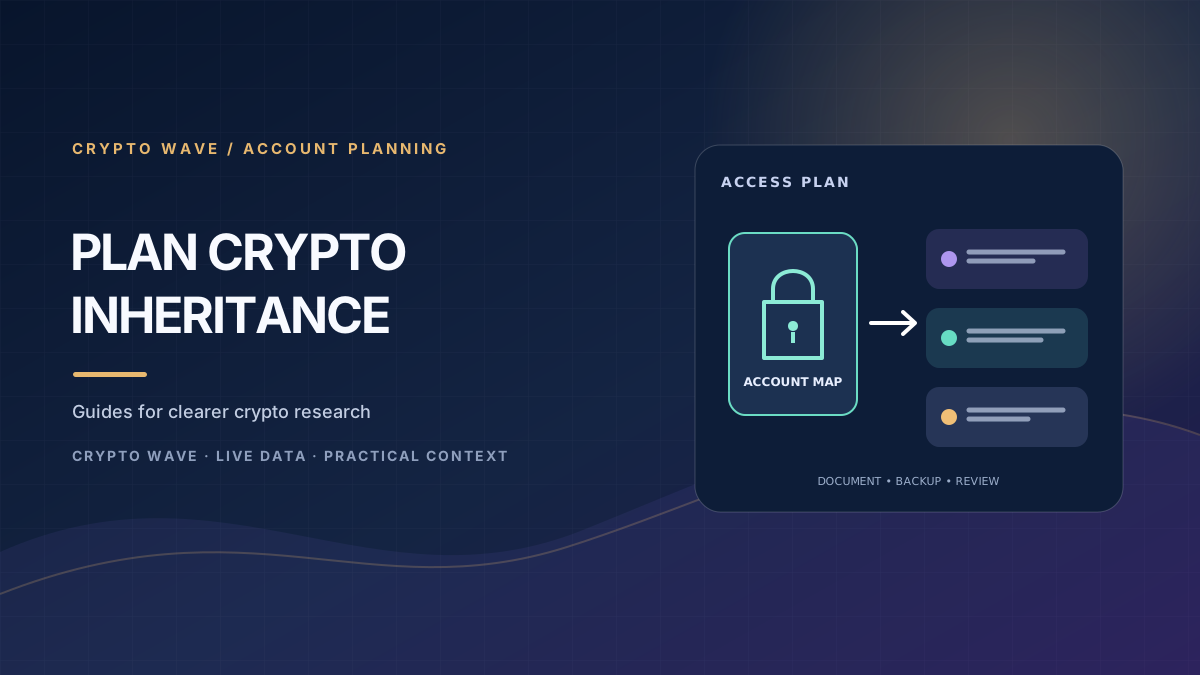
A claimant cannot ask for an account they do not know exists. Account holders can prepare a secure inventory that lists the exchanges and wallet providers they use, approximate account identifiers, the location of important records, and where an executor can find formal instructions. Keep the inventory separate from login credentials. A paper or encrypted record can tell a trusted person which official support process to follow without revealing a password or signing key.
For self-custody assets, exchange support cannot recover a private key it never controlled. The holder needs a separate recovery and succession plan that protects the recovery phrase from theft while making its location discoverable to the person authorized to act. Do not place an unencrypted seed phrase in a will, email, cloud note or article. Discuss secure access and legal authority with qualified professionals in your jurisdiction. CryptoWave’s crypto wallet guide and self-custody security checklist explain the custody distinction and key-handling risks.
Make the plan understandable to the person who may need it
Write a short, secure set of instructions in plain language: what types of accounts exist, where the provider’s official help page is, which person should contact the executor, and where supporting documents are stored. Explain that an exchange claim can require a formal review and that self-custody wallets follow a different recovery process. Review the instructions when an account, provider, device or jurisdiction changes.
A will or other estate document should deal with who is entitled to the assets; technical instructions should explain how an authorized person can locate them. Those are related but separate jobs. Rules for wills, estate administration, taxes, privacy and digital property vary substantially across jurisdictions. Consult an estate-planning lawyer or other qualified local adviser rather than copying a template from the internet. Binance’s official terms and support instructions should also be reviewed for the specific Binance entity and service involved.
If you are handling a claim now
- Use your own account and navigate to Binance Support through the official website or app.
- Find the current Inheritance Appeal instructions; do not rely on a search-result snippet or old screenshot.
- Gather only the requested documents and submit them through the verified channel.
- Keep copies of the submission, case reference and support replies.
- Wait for review and respond through the official case. Never share account credentials or a wallet seed phrase.
Processing times and outcomes depend on document review, account status, applicable rules and the individual case. A nominee label or family relationship alone may not establish legal entitlement. Binance’s official support center is the place to confirm the current route and ask about your circumstances.
Binance inheritance: questions to ask before relying on a feature
- Does Binance document this feature for my verified region and account?
- Is it an emergency contact, a claim process, or a legally recognized beneficiary designation?
- What information can the contact see or do, and when?
- Which legal documents and identity checks are required after death?
- How does the plan cover self-custody wallets and assets on other platforms?
- Who can locate the instructions, and how are credentials kept private?
CryptoWave’s Binance exchange profile and exchange directory are starting points for research, not legal guidance or endorsements. Verify all account procedures with Binance and get advice from a qualified professional familiar with local estate law. This article is educational and does not provide legal, tax or financial advice.