What does a crypto exchange charge when you buy, sell or withdraw? The answer can include more than the headline trading-fee percentage. A maker or taker fee may apply to each fill, the quoted price can include a spread, and moving coins to a wallet can add a withdrawal charge. Payment method, trading pair, account tier and network also matter. This guide explains crypto exchange fees in plain language and shows how to estimate costs before placing an order.
Fees vary by exchange, product and location, and schedules can change. Use this as a framework, not a live price list. Browse CryptoWave’s crypto exchange directory, then confirm costs in the provider’s current fee schedule and order preview. The CryptoWave currency pages help you inspect assets and markets, but a displayed market price is not a guaranteed execution price.
What are crypto exchange fees?
A trading fee is only one possible charge. Spot orders can incur a fee on each executed amount. A simplified buy or convert screen may quote a price that incorporates a spread or service charge. Depositing funds and withdrawing crypto can have separate costs. These may appear as distinct lines or be combined in the transaction quote.
Check which product you are using: instant buy, an advanced order book, convert, margin and futures can each have different rules. Borrowing or funding costs are also separate from a spot trading fee. Compare the same asset, pair, product, order type, region and payment route.
Maker vs. taker fees: what is the difference?
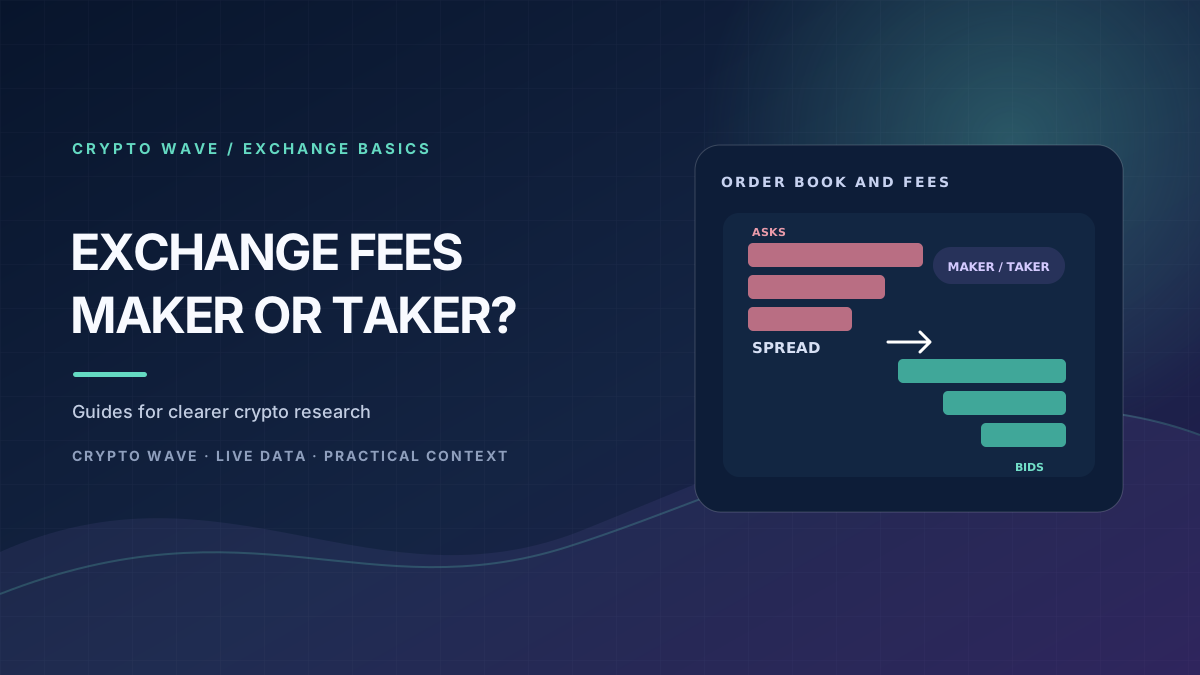
On an order-book exchange, a maker order adds an offer to the book and waits to be matched. A taker order matches an offer already there, removing available liquidity. An exchange using maker-taker pricing applies a fee based on how a fill interacts with the book; maker rates may be lower, but schedules differ. Kraken’s official maker and taker fee guide explains these order roles.
A limit order is not automatically a maker order. If its price crosses the book and executes immediately, that fill can be charged at the taker rate. A “post only” option, where available, is designed to prevent immediate execution; the platform may reject an order that would cross the book. A market order seeks immediate execution and is typically treated as taker.
Trading fees are often calculated as a percentage of executed value, but the fee may be deducted in the asset received, the quote currency or a separate balance. Binance’s official spot fee calculation guide shows why fee currency matters.
Spread vs. trading fee
The bid-ask spread is the gap between the best buyer’s bid and the lowest seller’s ask. It is a market price difference, not necessarily a line-item fee. If you buy at the ask and immediately sell at the bid, the spread contributes to the round-trip cost, even when the stated trading fee is low. Spreads can change with liquidity, volatility, order size and venue.
Some simple-buy or convert products quote prices that incorporate spread; an order-book interface may show bids, asks and depth separately. The quoted price can also differ from a reference or midpoint. Coinbase’s official pricing and fees disclosure describes how spread and fees appear in its products. Check the specific screen you use.
A simple example: estimate the visible trading cost
Suppose you place a $1,000 spot order and the applicable rate is 0.20%. The estimated trading fee is $1,000 × 0.002, or $2, before any discount or fee-currency conversion. If the best ask is $50,050 and the best bid is $49,950, the $100 spread equals 0.20% of the $50,000 midpoint. Buying at the ask is about $50 above midpoint for one unit; selling at the bid is about $50 below. This is a simplified comparison, not a prediction of fills.
If you later withdraw, add that cost separately. A hypothetical $3 withdrawal charge would make the visible total $5 in this example, before deposits, payment, conversion or other network costs. Use the quote for your exact order and transfer, and do not count spread twice if it is already included in the displayed price.
Crypto withdrawal fees and network costs
A crypto withdrawal fee is charged when an exchange sends an asset to an external address. It may be set by the provider, based on estimated network costs, or include a handling component. Blockchain transaction costs vary with network conditions. The same token can also exist on multiple networks with different fee mechanics and address formats; a cheaper route is useless if the receiving wallet does not support it.
Before confirming, verify the asset, destination address, network, minimum withdrawal, fee currency and net amount the recipient gets. Check whether the fee is fixed or variable and review the final preview. For more on exchange custody versus self-custody, read CryptoWave’s crypto wallet guide. Never share a recovery phrase to “verify” a withdrawal.
Fee tiers, discounts and promotional rates
Many exchanges publish tiers based on recent trading volume, account level or eligibility rules. Check qualifying volume, the measurement window, included products and when the tier updates. Discounts for paying fees with an exchange token have conditions, and the token’s value can change. Promotions may exclude pairs, users or regions, or expire.
Compare your likely total cost, not the best rate in an advertisement. Trading extra to reach a tier can cost more than the discount saves. CryptoWave’s screener and comparison guide explains how to read market fields without treating them as execution quotes.
Checklist: verify the real cost before trading
- Confirm the product, pair, region and current maker/taker tier.
- Check whether the order will rest or execute immediately.
- Review the spread, quoted price, estimated fee and fee currency.
- For withdrawals, confirm network support, minimum, fee and net amount.
- Compare the official schedule with the final trade or transfer receipt.
Liquidity, price movement, order size, timing and transfer risk affect execution alongside fees. CryptoWave’s exchange listings are research references, not endorsements. Verify current provider terms before placing an order; this guide is educational, not investment or tax advice.