People searching “how to short crypto” are often trying to understand how traders can gain exposure to a price decline. Short exposure can come from different products, and the mechanics matter: a spot sale, margin borrowing, a dated futures contract, and a perpetual contract are not the same thing.
This guide explains the general mechanics of short crypto exposure, using Binance perpetual futures as an example of a product whose current terms must be checked directly. It is not trading advice or a recommendation to use Binance or any derivatives venue. Browse the CryptoWave exchange directory for market profiles and the currencies page for asset information, then verify a platform’s actual rules and availability.
What does it mean to short crypto?
A short position is designed to gain value if an asset’s price falls, before fees and other effects. In a traditional borrow-and-sell arrangement, a trader borrows an asset, sells it, and later buys it back to return the borrowed amount. The position can lose value if the price rises, and the trader may owe borrowing costs.
With a cash-settled futures contract, the trader takes price exposure through a contract rather than selling coins they borrowed. Perpetual futures are a kind of futures contract with no scheduled expiry. Their contract price can differ from spot, and exchanges use funding payments to help keep the perpetual price aligned with the underlying market. The contract does not necessarily give the trader ownership of the underlying cryptocurrency.
How a perpetual short position behaves
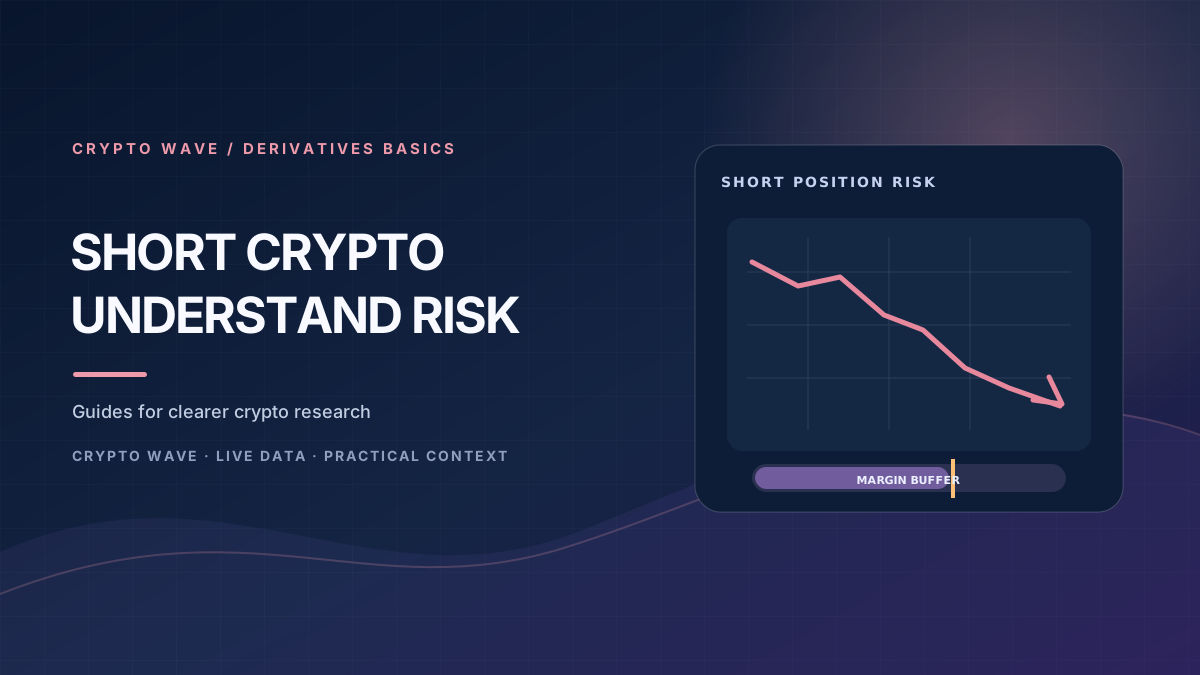
In a simplified example, a short perpetual position has negative price exposure: if the contract price falls, its mark-to-market value may rise; if the contract price rises, it may lose value. The final result also depends on position size, entry and exit prices, fees, funding payments, and the exchange’s contract rules.
Funding is exchanged periodically between long and short position holders. When a rate is positive, longs may pay shorts; when it is negative, shorts may pay longs. This direction and the amount can change. Funding is not guaranteed income. Binance’s official funding-rate guide explains its perpetual funding mechanism, including that the rate and settlement interval are subject to change.
A trader may also face a difference between the contract price and the spot price, known as basis. The contract may not track a spot holding exactly, so a short perpetual position does not always offset a coin portfolio perfectly. This mismatch can widen or narrow while the position is open.
Leverage, margin, and liquidation
Derivatives often let users open a position with margin smaller than its notional exposure. Leverage makes a small price move larger relative to the posted margin. For illustration, a hypothetical $1,000 notional position using $100 of margin has ten times the exposure of the margin amount; this does not predict profit or loss and excludes fees, funding, and platform rules.
If a position loses value and the account’s collateral falls below the maintenance margin requirement, the exchange may liquidate the position. A short can be liquidated after a sharp upward move. Liquidation can happen before a trader expects if the platform uses a mark price or index-based reference rather than the most recent trade. Binance describes how mark price and liquidation protocols work for its futures products. Exact details differ by contract and can be updated.
Liquidation is not simply a warning notification. It can close a position automatically, cancel orders, add fees, or leave the user with a loss. Cross-margin settings can expose more of an account’s eligible collateral; isolated-margin settings allocate collateral differently. Neither setting removes the possibility of loss.
Costs that can affect a short
- Trading fees: charged when opening or closing, according to the venue’s fee schedule and order execution.
- Funding: periodic payments that may be received or paid, depending on the rate, direction, and settlement moment.
- Spread and slippage: the execution price can differ from the displayed price, especially in a thin or fast market.
- Borrowing costs: applicable to some margin products, and separate from a perpetual contract’s funding.
- Liquidation charges: some venues impose additional costs if they close a position through liquidation.
Before opening any position, read the contract specifications, margin tier, fee schedule, funding information, and liquidation rules for that exact product. Rates and availability can vary by symbol, account, and region.
Why short exposure can be difficult to manage
Crypto prices can rise sharply and without warning. A short position has a loss profile that can be severe because the asset price has no fixed upper limit. Leverage can make liquidation more likely after a relatively small adverse move. A stop order may not fill at its trigger price if the market gaps, liquidity disappears, or the order becomes a limit order that remains unfilled.
Funding and basis can also work against a position that is otherwise moving in the anticipated direction. For example, a short could face negative funding payments while the contract basis changes. CFTC guidance warns that virtual-currency futures are high risk and that leverage magnifies price exposure; read its virtual currency trading advisory.
Binance availability and product terms
Binance offers multiple exchange products, and a derivatives feature may not be available to every user. Country, residence, verification status, account type, and local regulation can affect what appears in an account. Product availability and terms can change, so check the current Binance interface and applicable service agreement for your location. Binance’s own futures access and rules page advises users to review the applicable contract and clearing rules.
Do not use a VPN, inaccurate identity details, or another person’s account to bypass regional restrictions. If the relevant derivatives product is unavailable, that is a signal to stop and review local rules, not to route around them.
Questions to answer before considering a short
- Do I understand whether this is margin, a dated future, or a perpetual contract?
- Can I lose more than the amount I expected to commit as margin?
- Which price triggers liquidation, and how is that price calculated?
- What happens if the position is open when a funding payment settles?
- Could low liquidity, a price gap, or platform downtime prevent an exit?
- Is this product permitted and available in my location?
Key takeaway
Short crypto exposure can be created through several products, each with distinct costs and risks. Perpetuals add funding and liquidation mechanics; margin shorts may add borrowing costs. Understand leverage, mark price, fees, and local availability before engaging with a product. This article is for education only and is not financial, investment, legal, or tax advice.
For broader context on reducing price exposure, read our guide to crypto portfolio hedging.