Searches for the best crypto grid trading bots often promise an easy way to automate buy-low, sell-high trading. A grid bot automates preset orders; it cannot predict the market or guarantee profit. Results depend on the pair, price range, grid spacing, fees, inventory and market conditions.
This guide explains how crypto grid trading bots work, how spot and futures grids differ, and what to check before using a provider. It is an educational comparison framework, not a bot ranking or endorsement. CryptoWave’s exchange directory and currency pages help with research, but do not make trading recommendations.
What is a crypto grid trading bot?
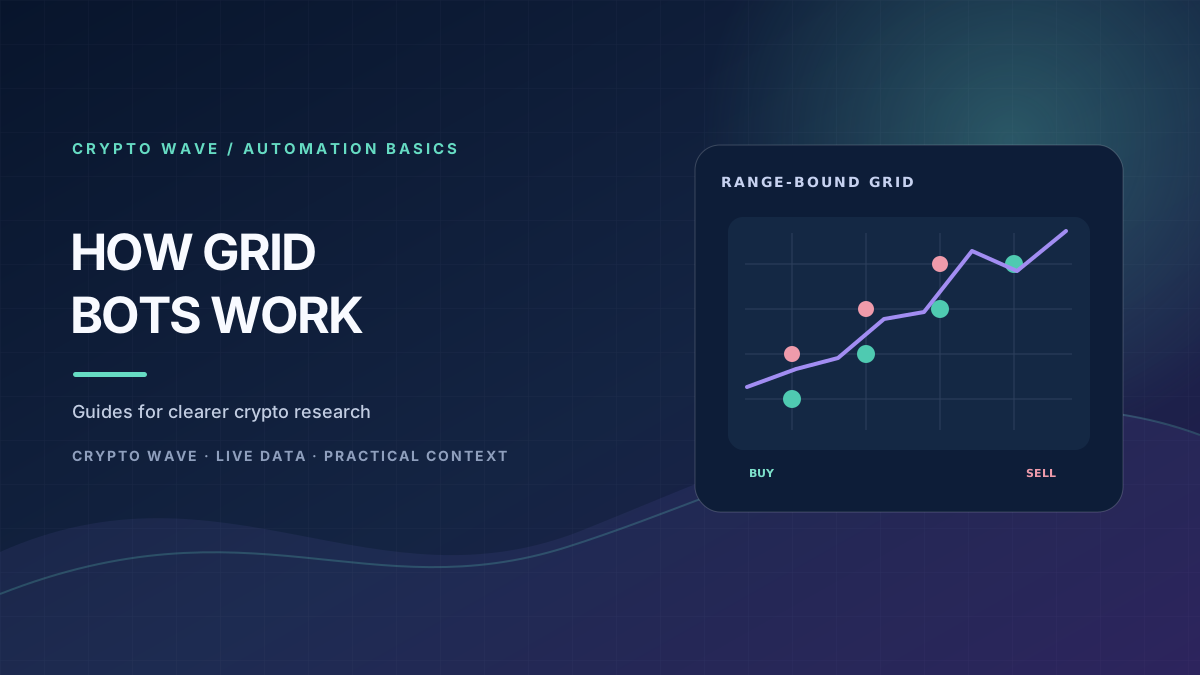
A grid bot places buy and sell orders at preset price levels within an upper and lower boundary. The levels form a ladder or “grid.” When a buy order fills, the bot may place a sell order at the next higher level; when a sell fills, it may place a buy order lower down. The aim is to respond systematically to price movement within the configured range.
Imagine an asset near $100. A user configures a hypothetical spot grid between $90 and $110, with several equally spaced order levels. If price moves down through a buy level and later rebounds through a sell level, that cycle may produce a gross difference between the fill prices. That difference is not net profit: fees, spread, partial fills and changes in asset value matter. Actual behavior depends on the bot’s rules and venue.
How range and grid spacing change behavior
The lower and upper prices define where orders are active. If price leaves that range, the bot may stop placing new grid trades or hold inventory until price returns; behavior differs by product. Narrow spacing can mean more frequent orders, but small price steps may be consumed by fees and spread. Wider spacing means fewer, larger steps and potentially fewer completed cycles.
Grid count determines how many intervals divide the range. More intervals generally make steps narrower; fewer intervals make them wider. Arithmetic spacing uses equal absolute price increments, while geometric spacing uses equal percentage increments. Trading rules, minimum order sizes, tick sizes and available balances limit which configurations are possible.
Spot grid vs. futures grid
A spot grid trades the underlying assets through spot orders. As buys and sells execute, the mix of base and quote assets changes. If the market falls below the range after multiple buys, the account may hold more of an asset whose price has fallen. If price rises through the top, a strategy may have sold some holdings and may not participate fully in a continued rally.
A futures grid uses derivative contracts rather than the same spot inventory. Depending on the contract and configuration, futures may involve leverage, margin, funding payments and liquidation risk. These can amplify losses or force a position closed. Binance’s official Futures Grid guide describes its product settings; read current contract and risk terms before using any futures bot.
Estimate net results, not just “grid profit”
A completed buy-sell cycle can show a realized price difference, but that number may exclude open inventory, unrealized losses, fees, funding or opportunity cost. Provider dashboards can define profit metrics differently. Read the calculation method and check whether it includes open positions.
Suppose a grid buys one unit at $98 and later sells it at $100. The $2 gross difference must cover fees on both fills and any execution difference from the displayed price. Calculate each fee from its executed value; do not assume “profit per grid” is after every cost. Futures strategies also need to account for funding and margin effects. CryptoWave’s exchange-fee guide explains how fees and spreads can affect fills.
Key risks of automated grid trading
- Strong trends: A grid designed for sideways movement can accumulate losing inventory in a decline or sell too early in a rally.
- Range breaks: Price can remain outside the configured range while inventory risk remains.
- Fees and execution: Frequent orders, spread, low liquidity and partial fills can consume the gap between levels.
- Parameter changes: Moving a range or restarting a bot can realize losses, rebalance holdings or create new exposure.
- Provider and API risk: A bug, outage, leaked key or compromised account can create unwanted orders.
- Leverage: Futures add margin, funding and liquidation risks that spot grids do not have in the same way.
Automation does not make a strategy safe or self-managing. Monitor orders, holdings, errors and realized plus unrealized results. Decide how to pause the bot, handle an exchange outage, and manage open orders if its control application disconnects.
How to compare grid trading bots
When comparing the best crypto grid trading bots for your needs, start with provider terms, not a leaderboard. Check whether the exchange or a third party operates the bot, supported countries, API permissions and fees. For an API-based service, use a dedicated key with only the required permissions, restrict it to trusted IPs where possible and disable withdrawals. Binance’s official API security and permission documentation explains exchange key scopes.
Review support for paper or test trading, partial fills, order rejections, pause/close controls and order-history export. Confirm that the price feed, pair, base currency and fee assumptions match your account. Never paste secrets into chat, an unverified website or a shared configuration file.
Historical performance is not a forecast. A range selected after a market move may look good in a backtest and fail in another trend or volatility regime. Check the sample period, whether fees and delisted assets are included, and whether results are simulated or live. Copying another user’s parameters does not copy their risk tolerance, timing or holdings.
A cautious testing checklist
- Explain the strategy and identify the market conditions it assumes.
- Choose spot or futures knowingly; understand inventory, margin and funding exposure.
- Model a range break in both directions and include trading costs.
- Use paper trading or a supported test environment before a live connection.
- Limit permissions, disable withdrawals, protect keys and set a position cap.
- Define alerts, a review schedule and a kill switch before starting.
- Check actual fills and account value, not only headline bot profit.
Use CryptoWave’s asset comparison tool for market context, then verify venue rules with the provider. A grid bot can execute preset orders while you are away; it cannot remove market, platform or execution risk. This article is educational, not investment advice, and no bot can guarantee that a strategy will make money.